How to farm 100+ Fortnite sprites in two hours during Fortnitemares 2026
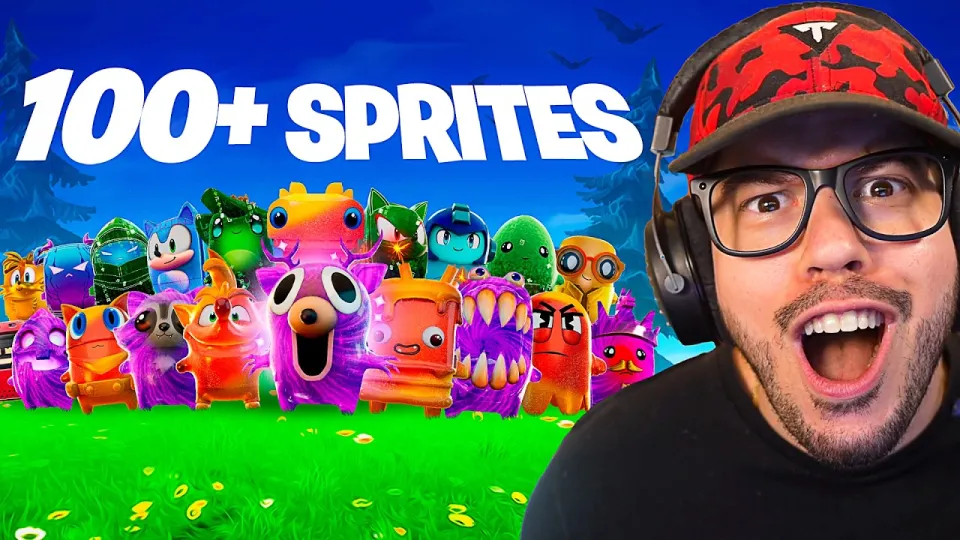
Video: Finding 100+ Sprites in 2 HOURS! (Fortnitemares 2026)
Need articles like this for your video? They help promote it on YouTube and Google — order them in the Telegram bot @sat_sit_bot. Articles with your video embedded are written and posted by the bot itself — on popular topical sites (no ads). Try it free: 50 articles on us.
· based on the channel TG Plays
Key takeaways
- The target is 100+ sprites in a single two-hour session, roughly one sprite every 70 seconds.
- Fortnitemares 2026 sprites are bounty targets: eliminating the marked opponent drops the sprite.
- Overdrive is the mobility tool viewers keep asking about, and it is what makes a 100-sprite pace possible.
- A power hour format means one continuous run with no breaks, so storm timing matters more than kills.
- Golden Grove is a community-suggested spot for sprite density.
Farming 100+ Fortnite sprites in two hours during Fortnitemares 2026 comes down to treating the event like a bounty route rather than a scavenger hunt: accept sprite bounties constantly, use Overdrive to cross the map between targets, and bank every sprite before the storm forces you inward. The TypicalGamer Fortnite creator page is where TG Plays points players for new maps and updates first, and it is a good bookmark if you want to run the same style of session.
The run that inspired this guide is TG Plays' "Finding 100+ Sprites in 2 HOURS! (Fortnitemares 2026)", a self-described bounty hunter sprite power hour: one long session, one goal, no downtime. Below is how that pace is actually built, what the sprite grind costs you in terms of storm exposure, and the questions viewers keep raising about Overdrive, fall damage and whether an alt account in Zero Build is the better challenge.
What Fortnite sprites are and why 100 in two hours is a real benchmark
Fortnite sprites are Fortnitemares collectibles tied to bounty-style objectives, so the bottleneck is not searching containers but clearing targets fast enough to keep a bounty slot occupied at all times. A two-hour window is roughly 120 minutes; hitting 100+ means averaging better than one sprite every 70 seconds, including travel, fights and the occasional dry spell. That average is why the power hour format exists: any minute spent looting cosmetics or standing still is a minute you cannot recover, because bounty respawns and target availability set the ceiling.
The practical implication is that sprite count is a function of three variables — how fast you find a target, how fast you kill it, and how fast you get to the next one. Most players are fine at the middle step and lose the run on the first and third.
The bounty loop that keeps sprites coming
A sprite run is a loop, not a route, and the loop has to be short enough that you are never without an active bounty. Run it in this order:
- Land somewhere with dense traffic and quick rotations rather than a quiet corner, because bounties need opponents.
- Pick up the sprite bounty immediately and check the marker before you commit to a fight you cannot finish.
- Close distance with movement items and vehicles, not with long sightlines — every second of walking is a second without a bounty.
- Finish the target, confirm the sprite drop, and re-accept a new bounty before you loot anything else.
- Only heal and restock when you are already moving toward the next marker.
The failure mode is obvious in hindsight: players treat each bounty as a mini-quest, clear it carefully, then realise four minutes have passed. The power hour approach inverts that — the bounty is a waypoint, and the loot is whatever you happen to grab on the way.
Overdrive and mobility: the question everyone asks
Overdrive is the mechanic viewers keep flagging in the comments as the thing that makes a 100-sprite pace look effortless, and it is the correct instinct: sustained mobility is what converts a good kill rate into a good sprite rate. If you are moving at sprint-and-vehicle speed between bounties, you spend your two hours fighting; if you are walking, you spend them travelling.
Build your loadout around that principle. A slot for healing, a slot for a fast-firing weapon that ends fights before third parties arrive, and the rest for movement. Do not over-invest in a sniper or a slow heavy weapon for a sprite run — long-range duels stall the loop, and a stalled loop is a lost sprite. When a bounty marker sits across a river or on a cliff, rotate around rather than climbing straight up; the extra ten seconds of detour is cheaper than a bad fight on high ground.
Storm timing, fall damage and the risks of a two-hour session
A two-hour Fortnitemares session means multiple matches, and the biggest silent killer of a sprite run is the storm, not opponents. Viewers routinely joke about storm sickness and fall damage, and the joke has a real cost: a player who dies to the storm at 90 sprites has to rebuild momentum from zero in the next match. Treat the circle as a hard timer on each bounty — if the marker is outside the safe zone with less than a minute of rotation time, drop the bounty and reposition.
Fall damage is the other avoidable loss. Overdrive-style movement and vehicle exits encourage risky drops, so build the habit of landing on slopes and low roofs instead of sprinting off cliffs. In a run where every death costs you the match's accumulated sprites, one careless fall is worth more than one lost fight.
Where to farm sprites and how to pick a drop
Sprite density follows player density, so the best drop is the one with the most traffic and the fastest exit, not the one with the most chests. Community suggestions for sprite hunting have pointed at locations like Golden Grove, and the logic holds: named POIs with multiple approach lanes give you bounties, targets and quick rotations in the same place.
Use these criteria when choosing a drop for a sprite session:
- Multiple exit directions so you are not funnelled into one fight.
- Vehicle or movement-item access within the first thirty seconds.
- Enough verticality to break line of sight when a third party arrives.
- Proximity to the next likely bounty marker rather than the centre of the map.
If a drop goes quiet — no bounties, no targets — rotate early. Two minutes of patience in an empty POI is two sprites you will not get back.
Zero Build, alt accounts and other ways to raise the difficulty
Once the basic loop is comfortable, the natural next step is adding constraints, and the most common suggestion from the community is running the challenge on a fresh account in Zero Build. That removes build-fighting as an escape hatch, which forces cleaner rotations and makes Overdrive-style mobility even more valuable. It also resets your matchmaking pool, which changes the pace of bounties.
Other constraints worth trying, in rough order of difficulty:
- No vehicles — movement items only.
- One weapon slot reserved for a shotgun, so every fight has to be closed fast.
- A hard cap on healing items, which punishes long duels.
- A fixed drop for the whole session, which tests route knowledge rather than adaptability.
Each constraint slows the loop, so lower your sprite target accordingly — 100+ in two hours is a clean-run benchmark, not a guarantee under self-imposed rules.
Useful links
- TypicalGamer on Fortnite — follow for new maps and updates first.
- JOGO studio page — TG's studio, where the custom Fortnite games are built.
- TypicalGamer Discord — community hub for sessions and map news.
- TypicalGamer on Twitter and Instagram — updates and clips.
The takeaway from a 100-sprite power hour
A 100+ sprite run in two hours is a pacing problem before it is a skill problem: the players who hit the number are the ones who never let a bounty slot sit empty. Build the loop, protect it with Overdrive-style mobility, and respect the storm as a timer rather than an inconvenience. The format itself comes from TG Plays, whose Fortnitemares 2026 power hour is the clearest demonstration of how much a single two-hour session can produce when every minute has a target. If you want to run it yourself, start with the loop above and follow TypicalGamer on Fortnite so you catch new maps and updates before the next event window closes.
Source: Finding 100+ Sprites in 2 HOURS! (Fortnitemares 2026) · Markdown version
Questions & answers
How many sprites can you realistically collect in two hours of Fortnite?
A clean run with constant bounties supports 100+ sprites in two hours, which works out to roughly one sprite every 70 seconds including travel and fights. Slower sessions with downtime between bounties typically land well below that, because the limit is how often you can hold an active target rather than how much you search.
Is Overdrive necessary for a fast sprite farm?
Overdrive-style mobility is the single biggest lever on sprite rate, because it shortens the gap between bounties. You can still farm sprites without it, but you will spend a much larger share of the session travelling instead of fighting, and the 100-sprite target becomes unrealistic.
What usually ends a long sprite session early?
Storm damage and fall damage end more runs than enemy players do. Dying to the storm at a high sprite count resets your momentum for the next match, and one careless drop off a cliff costs the same as losing a fight, so treat the circle as a hard timer on each bounty.
Should I try the sprite challenge in Zero Build on a new account?
Zero Build on a fresh account is a popular way to raise the difficulty, since it removes building as an escape and forces cleaner rotations. Expect a lower sprite total while you adjust, and lower your target before judging the run.